
New federal data show modest growth in farmed seafood production, but a decade after peaking, Canada’s aquaculture sector remains deeply constrained by policy uncertainty as global competitors scale up.
By Fabian Dawson
SeaWestNews
Canadian aquaculture is rebounding modestly, but fresh federal statistics underline how Ottawa’s policy uncertainty has left the sector well short of its former production levels as other countries press ahead with expansion.
New Statistics Canada data show sales of Canadian aquaculture products and services rose 8.8 percent in 2024 to $1.4 billion, while farmed finfish production increased 11.6 percent year over year to 122,280 tonnes. The gains mark a recovery after several weak years, but they also highlight how far national production has fallen from its peak.
Total Canadian finfish output stood at roughly 160,000 tonnes in 2016. Nearly a decade later, production remains about 40,000 tonnes lower, even after growth in Atlantic Canada.
“While we are happy to see some increases in Atlantic Canada and an increase in value for shellfish, we are nowhere near where we should be as a country,” said Tim Kennedy, president and CEO of the Canadian Aquaculture Industry Alliance (CAIA).
The regional breakdown in the data points to a widening imbalance driven by policy conditions rather than market demand. For the first time since Statistics Canada began reporting on aquaculture numbers in 1991, the Atlantic provinces collectively produced more farmed finfish than British Columbia. Finfish production in Atlantic Canada rose 18.5 percent in 2024, led by Newfoundland and Labrador, which posted a 48 percent increase. Over the same period, British Columbia production rose 6.3 percent, but the province’s share of national finfish output fell to 44.7 percent, its lowest level on record.
Since 2020, activist-induced federal policy decisions have shut down about 45 percent of B.C.’s salmon farms. The planned removal of ocean salmon farms by 2029 continues to cloud investment decisions, trigger layoffs, undermine long-standing economic agreements with First Nations, and push production elsewhere.
“This continues to undermine confidence in the entire sector in Canada,” Kennedy said.
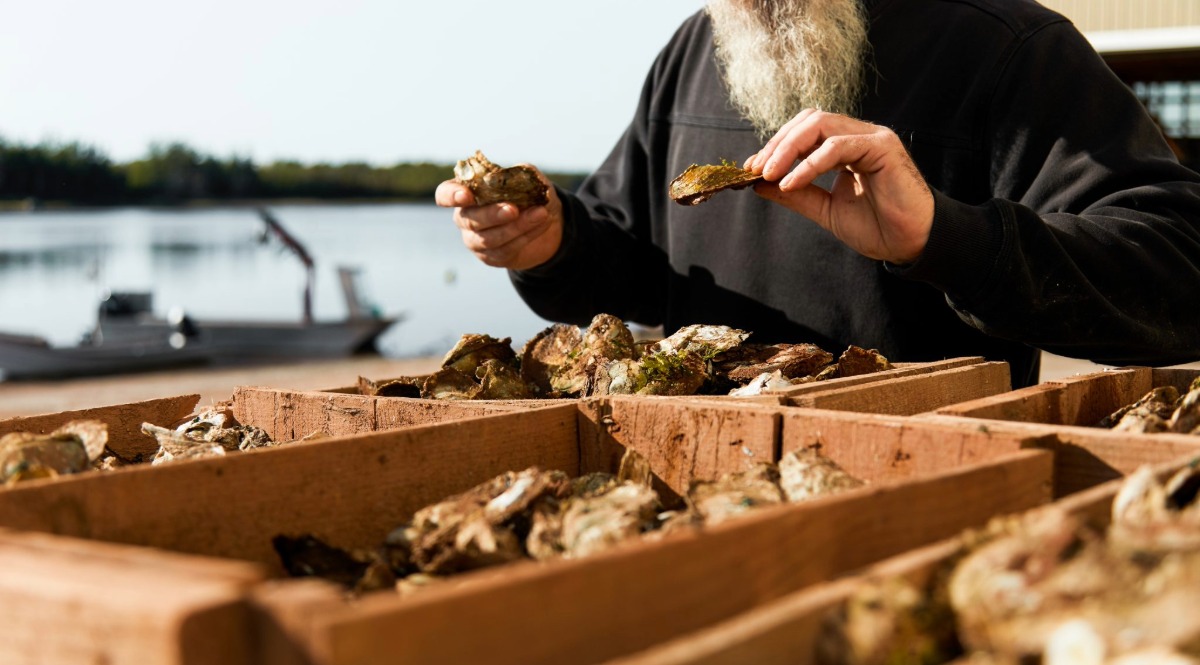
Shellfish production tells a similar story of constrained growth. National shellfish volumes declined 2.2 percent in 2024, even as higher prices pushed total value up 6.2 percent. Prince Edward Island remained the country’s dominant shellfish producer, but export volumes for mussels and oysters slipped, pointing to capacity and expansion limits rather than weak demand.
The contrast sharpens when Canada’s incoherent policy approach in BC is set against the aggressive expansion now under way in competing aquaculture nations.
Around the world, aquaculture has become the primary engine of growth in seafood supply. According to the United Nations Food and Agriculture Organization, farmed production now accounts for more than half of all aquatic food consumed globally, with growth significantly outpacing wild capture fisheries.
Aquaculture could generate as many as 22 million new jobs by 2050, according to a report produced by the World Bank and the World Wildlife Fund, that foresees a $1.5 trillion investment opportunity in the sector over the same period. The reportpositions aquaculture as one of the most promising opportunities for building a more sustainable food system over the next 25 years.
New Zealand is one of the clearest examples of how governments are leaning into that shift.

The country’s Ministry for Primary Industries projects aquaculture exports will reach NZD 650 million (about C$521 million), a 13 percent increase year over year, driven by higher-value mussel and salmon production. Wild-capture fisheries, by contrast, are expected to decline.
New Zealand’s coalition government has paired that growth with long-term strategy. Through its Aquaculture Development Plan, Wellington is targeting NZD 3 billion (about C$2.4 billion) in annual aquaculture revenue by 2035. The plan includes streamlined marine consents, extended approvals to give investors certainty, and direct public investment in open-ocean farming and selective breeding programs.
“This is a sector with potential for massive growth over the next decade,” New Zealand’s Minister for Oceans and Fisheries Shane Jones said recently. “We’re removing barriers and backing innovation so the industry can scale.”
Canada, Kennedy argues, faces the same opportunity but is moving in the opposite direction.
“Canada has the most cold-water aquaculture potential in the world. We can be a global leader, but to build Canada strong, this opportunity needs to be realized,” said Kennedy.
“Right now, there is a window for Canada to re-set policy to embrace the seafood farming sector as part of the fabric of a competitive, innovative and sustainable Canadian agriculture and agri-food sector and protect Canadian workers and the over 3,000 supplier companies linked to the sector.”
According to CAIA, Canada’s farmed seafood sector generates more than $5.3 billion in total economic activity and $2 billion in GDP. In BC, ocean-raised salmon remains the province’s most valuable agri-food export, contributing roughly $1.17 billion annually to the provincial economy and supporting more than 4,500 full-time jobs. All salmon farms in the province operate in formal partnerships with First Nations.
“Now more than ever, Canada needs homegrown, responsibly raised and affordable protein,” said Brian Kingzett, Executive Director of the BC Salmon Farmers Association.
“With the federal government’s new focus on advancing the competitiveness of Canada’s fish and seafood sector and ongoing research supporting farm-raised and wild Pacific salmon co-existence, now is the time to reconsider the policy decisions harming rural communities and undermining food sovereignty.”
B.C.’s salmon farmers and their First Nations partners say a stable, evidence-based federal and provincial policy framework would allow the West Coast sector to expand, generating up to $2.5 billion annually in economic activity, $930 million in GDP, and 9,000 Canadian jobs.
(Main image courtesy of Prince Edward Island Seafood. Prince Edward Island is the country’s dominant shellfish producer.)