
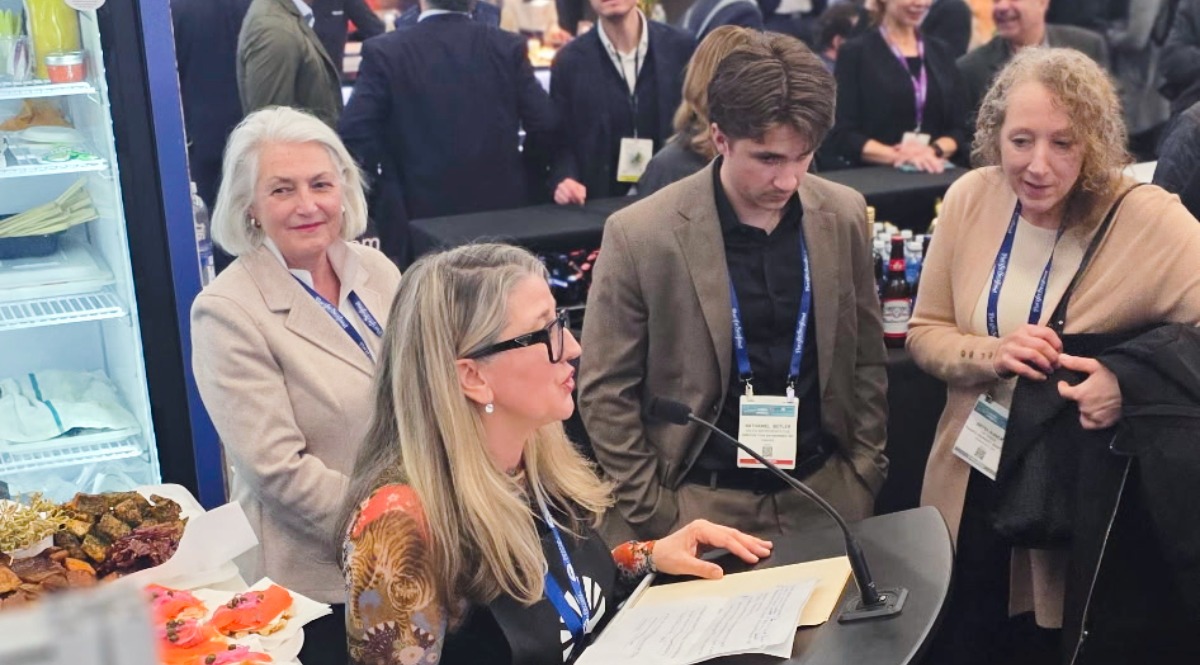
A strong Canadian delegation is using the ongoing Seafood Expo North America to promote exports and coastal jobs, amid growing calls for aquaculture and wild fisheries to be recognized as complementary strengths in the nation’s Blue Economy.
By Fabian Dawson
SeaWestNews
At North America’s biggest seafood trade show this week, Canada is in Boston celebrating farmed and wild seafood as twin strengths in a growing Blue Economy that stretches from coastal jobs at home to rising export opportunities abroad.
The show of strength is playing out at the 44th edition of Seafood Expo North America, where a strong Canadian delegation of ministers, exporters, processors and companies is promoting the country’s products, building trade ties and competing for a larger share of global seafood demand.
It also comes as more voices in the sector are calling for stronger synergies between wild and farmed seafood, stressing that both are essential to a Blue Economy built on science, stewardship and Traditional Ecological Knowledge.
“This industry drives economies in coastal communities right across Canada, and these products belong on every market, every shelf, and every table around the world,” said Joanne Thompson, Canada’s Minister of Fisheries.
“Last year, Canada exported $8.5 billion worth of fish and seafood to 114 countries and there’s plenty more room to grow,” she said in a statement.
Lana Popham, British Columbia’s Minister of Agriculture and Food, said the three‑day expo in Boston attracts thousands of buyers and suppliers from around the world, making it a strategic opportunity to expand the province’s seafood exports, which total $1.3 billion annually. Roughly 40 per cent of that export value comes from farmed salmon, all of it produced in direct partnership with First Nations and supports approximately 4,560 full time jobs.
“With an array of products, including wild and farmed salmon, halibut, shellfish, geoducks, crab and spot prawns, B.C.’s seafood sector is a cornerstone of the province’s food economy,” Popham said in statement, before heading to Boston.
Brian Kingzett, Executive Director of BC Salmon Farmers Association (BCSFA) said one of the clearest takeaways from Boston was how firmly farmed salmon has moved into the mainstream, with smoked products, ready-to-cook meals and other value-added offerings appearing across the show floor.
“They are just eating more and more farmed salmon everywhere you look, and it is moving into the mainstream…For our sector that’s really important, seeing the growth of the opportunity,” he said.
KIngzett said the show floor in Boston reflected the commercial reality that wild and farmed seafood are often part of the same broader food economy, sharing buyers, processors, infrastructure and export channels.

“We’re all in the seafood business, and we all support each other,” he said, adding that on the West Coast of Canada “there’s room for everyone.”
Yet the sense of common purpose Kingzett described in Boston is far less visible in British Columbia, where ocean salmon farming sits in the shadow of activist campaigns that have driven policy decisions separating the sector from the rest of the seafood economy.
B.C.’s salmon farmers and their First Nation partners are now urging the Mark Carney Government to reverse the activist-induced 2029 planned ban on ocean salmon farming in B.C.
They say with renewed science-based regulatory frameworks, the sector could generate up to $2.5 billion in annual economic output and about 9,000 jobs by 2030, rising to as much as $4.2 billion in annual output and more than 16,000 jobs by 2040.
“This is exactly the kind of seafood growth Ottawa and Victoria are championing in Boston …more exports, more jobs and more opportunity tied to coastal and Indigenous communities,” said Kingzett.
“We’re not asking for handouts. We’re not asking for money. We’re asking for the ability to grow salmon in a sustainable way with our First Nations partners and in support of a stronger wild fisheries sector.”
Kingzett’s case for growth, partnership and coexistence dovetails with a recent editorial by veteran seafood industry leaders Chris McReynolds and Wally Pereyra, who say it is long past time to stop pitting aquaculture against commercial fishing.
They wrote that “wild fisheries and aquaculture are not adversaries” but “essential and complementary parts of the seafood category competing in the world protein market.” They said wild harvest brings “ecological value, cultural heritage, and world-class products,” while aquaculture offers “stable supply” and “year-round jobs.”
The editorial also warns that outdated myths about aquaculture still shape policy debates and public perception long after science, technology and regulation have changed the industry.
The authors said that type of thinking cedes ground to foreign producers and prevents the development of a more resilient seafood economy built on shared infrastructure, stronger supply chains and cooperation across the sector.
This, the Canadian Aquaculture Industry Alliance, says is already starting to happen.
According to its economic report British Columbia’s farm-raised salmon output has fallen by more than 40 per cent since 2015, while Canada’s salmon imports have more than doubled over the same period, reaching roughly $700 million annually.
“Canada’s aquaculture production is a national economic treasure, but it has been seriously weakened by irresponsible government policies,” said Timothy Kennedy, CAIA President and CEO.
He said the salmon farming sector’s decline in Canada is tied directly to unscientific federal decisions during the Trudeau-era that have created uncertainty and chilled salmon aquaculture investment in B.C.
Main Image shows Lana Popham, British Columbia’s Minister of Agriculture and Food speaking at the 44th edition of Seafood Expo North America in Boston. Behind her is Joanne Thompson, Canada’s Minister of Fisheries.