
Veteran U.S.-based fisheries scientist says Ottawa risks repeating Washington State’s aquaculture policy failure with its plan to ban ocean salmon farming in BC.
By Fabian Dawson
SeaWestNews
Canada needs to reject the “false certainty” pushed by activists that is being used to pressure Ottawa into banning ocean salmon farming in British Columbia or risk the same aquaculture policy failure seen in Washington State, a veteran fisheries expert warns.
“In a highly politicized environment, policymakers can be drawn toward these false narratives, sometimes mistaking precautionary rhetoric for established science,” said Dr. Walter Pereyra, who has been involved in Pacific Northwest fisheries for more than six decades.
“The result is policy based on what might be called ‘false certainty,’ rather than on measured risk assessment and adaptive management,” he said in an interview with SeaWestNews after receiving the 2025 Lifetime Achievement Award from the Northwest Aquaculture Alliance (NWAA).
Dr. Pereyra said recent aquaculture-related decisions in both Washington State and British Columbia demonstrate how evidence-based governance can give way to political hunts for votes.
Dr. Pereyra points to a pattern in which activists’ claims framed as settled science continue to drive aquaculture decisions in BC, despite contradictory evidence. Assertions that removing salmon farms would sharply reduce sea lice and improve wild salmon survival have persisted even after long-term monitoring showed otherwise. Several peer-reviewed studies and government data point to broader drivers of wild salmon declines, including habitat loss, climate variability, predation and ocean survival.
He said the same dynamic played out in Washington State, where commercial net-pen salmon farming was eliminated on the assumption that land-based closed-containment systems would rapidly replace marine production. That transition never materialized. All commercial net-pen salmon farms in Puget Sound have since closed, leaving the state with reduced domestic seafood supply and no replacement capacity in place.
“Both of these decisions were political, not based on science,” Dr. Pereyra said. “In neither case did the government present new or compelling scientific evidence showing that well-regulated marine finfish aquaculture posed unacceptable environmental risk.”
Pereyra said Washington’s experience should serve as a cautionary example for Canada as Ottawa advances a proposed 2029 phase-out of open-net pen salmon farming in British Columbia.

“Washington entered into a memorandum of understanding with Sustainable Blue, an eastern Canadian RAS salmon company, with the expectation that its technology would be deployed in the state to offset the loss of net-pen farms and catalyze a new aquaculture sector,” he said. “That effort totally failed. Sustainable Blue subsequently entered bankruptcy, and no replacement production ever materialized.”
In British Columbia, salmon farmers and their First Nations partners have warned that a similar outcome is likely if the 2029 ban proceeds. Estimates indicate that about 4,500 direct and indirect jobs across coastal and Indigenous communities are at risk, along with hundreds of millions of dollars in annual economic activity tied to salmon farming, processing, feed supply, logistics and marine services.
Those impacts would fall heavily on younger workers entering the sector. Salmon farming has one of the youngest workforces in Canadian agriculture, with early-career technicians, vessel crews, farm managers and processing staff forming a growing share of employment. The Young Salmon Farmers of BC say prolonged regulatory uncertainty is already discouraging new entrants and limiting long-term career planning in coastal communities where alternative employment options are limited.
“When you eliminate an entire production system, you don’t just eliminate today’s jobs,” Dr. Pereyra said. “You eliminate pathways for young people who want to build careers in food production, science and marine stewardship.”
Dr. Pereyra said the central premise behind the proposed B.C. ban does not withstand scrutiny.
“The proposed ban on ocean open-net pen salmon farming in British Columbia by 2029 is without merit at this time,” he said. “The primary justification offered that production can simply shift to closed-containment systems on land does not withstand economic or technical scrutiny.”
He said land-based closed-containment salmon farming “has not yet demonstrated economic viability at commercial scale in today’s market,” citing higher capital costs, energy requirements and operating risk.
Dr. Pereyra also rejected claims that removing marine salmon farms would restore wild salmon stocks.
“I do not believe a ban on ocean finfish farms will restore wild salmon stocks,” he said. “Decades of peer-reviewed science show that when marine finfish farms are properly sited, managed and monitored, their impacts on wild stocks are minimal.”
“Rather than engaging with this evidence, opponents frequently rely on anecdotal or selective interpretations of data, or claims that have not withstood scientific scrutiny,” he said.
“Eliminating these farms does not address the primary drivers of wild salmon declines, including habitat loss, hydropower impacts, climate change, predation and harvest pressures,” he said.
Dr. Pereyra’s career includes senior roles with the U.S. National Marine Fisheries Service, service on the North Pacific Fishery Management Council, and leadership in establishing the U.S. Exclusive Economic Zone in the 1970s. He is also recognized as a pioneer of the U.S. pollock industry and currently serves as chairman of Arctic Storm Management Group and ProFish International.
Earlier in his career, Dr. Pereyra worked in Chile, where he predicted the country could become a major salmon producer. Chile now produces more than one million tonnes of farmed salmon annually.
“Science does not argue for the elimination of marine finfish aquaculture…it supports thoughtful regulation, continuous monitoring and improvement,” Dr. Pereyra said. “If we want both healthy wild salmon populations and sustainable seafood production, policy must be grounded in evidence, not in misinformation or fear.”
“I hope Canadian decision-makers will follow the evidence and allow properly managed net-pen salmon farming to continue in British Columbia waters, rather than repeating the costly policy failure recently seen in Washington State through a symbolic ban,” he said.
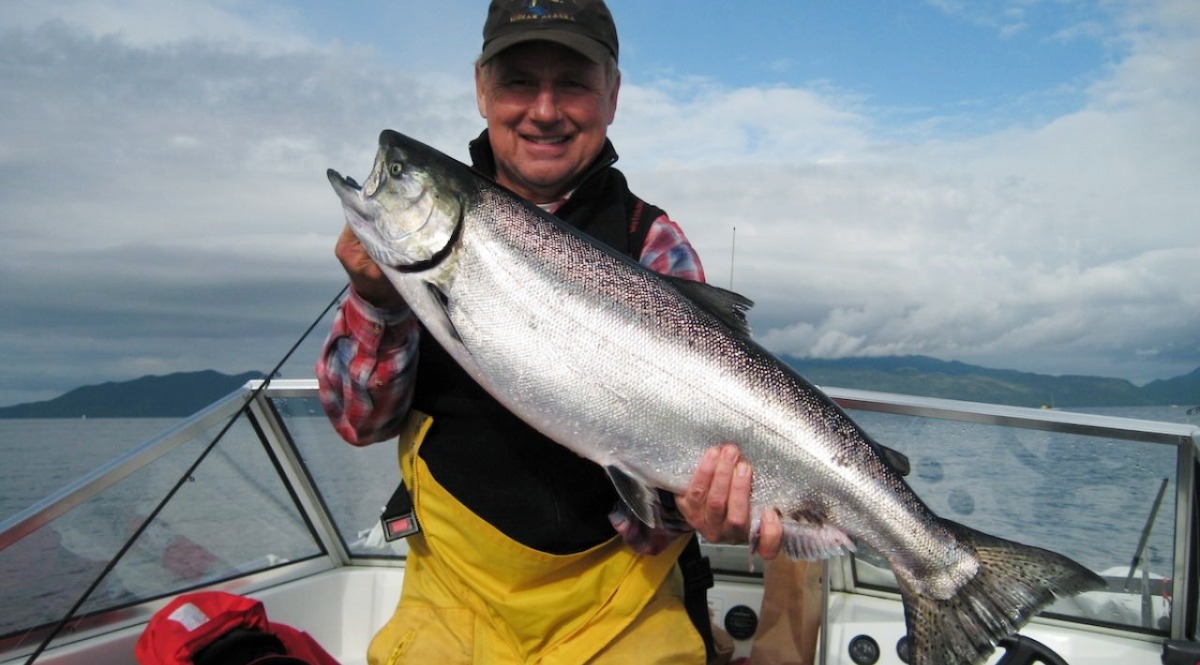
Main image shows Dr. Wally Pereyra, a veteran US-based fisheries expert.