
Salmon farming First Nations accuse B.C. businessman Tony Allard and his network of aquaculture detractors of spreading fear, distorting science and dismissing Indigenous authority, as calls grow for the activists to be held accountable for their claims.
By Fabian Dawson
SeaWestNews
Coastal First Nations that host salmon farms have told businessman Tony Allard and his activist network seeking to shut down the marine aquaculture sector in British Columbia to stop speaking for them, stop spreading fear and start dealing in facts.
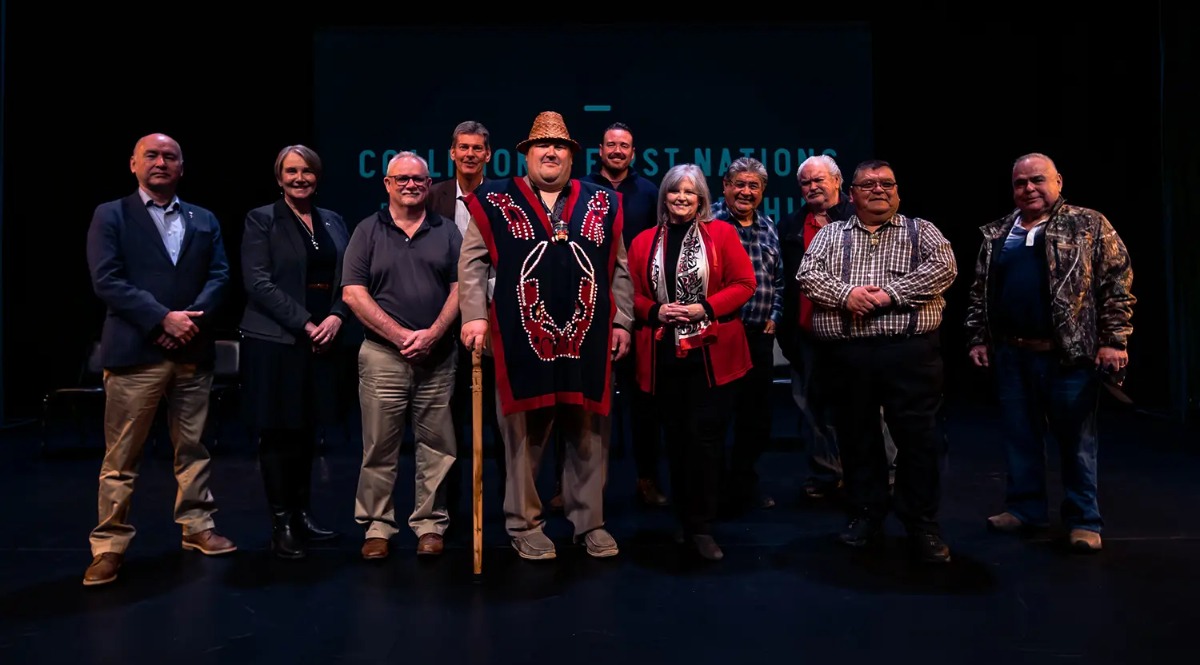
In an open letter, the Coalition of First Nations for Finfish Stewardship accused the wealthy Wild First leader of campaigning to remove salmon farms from Indigenous territories while repeatedly refusing invitations to meet the communities whose jobs, revenues and economic futures are at stake.
The letter responds to an opinion piece in which Allard urged Prime Minister Mark Carney to preserve the Trudeau government’s plan to eliminate open-net salmon farming in British Columbia by 2029.
The Nations have invited Allard to visit their territories and take part in what they called respectful, evidence-based dialogue. So far, they said, the invitation has produced little meaningful engagement.
“Constructive dialogue requires more than competing opinion pieces,” the coalition said. “It requires a willingness to examine evidence, listen to the Nations directly affected and recognize that First Nations do not hold a single position on aquaculture.”
The coalition was even more direct about Allard’s crusade.
“For nearly a decade, Tony Allard has used his personal wealth-funded platform to incite unfounded fear about the effects of salmon farming on wild Pacific salmon,” it said.
The Nations agree that wild salmon are central to Indigenous cultures, identities and food systems. What they reject is Allard’s claim that protecting wild stocks requires Ottawa to remove marine aquaculture from the territories of Nations that have chosen to participate in it.
They also point to a contradiction at the heart of his argument.
Allard promotes a larger wild salmon economy, which would depend on catching more fish from stocks already under pressure from warming oceans, damaged habitat, pollution, urban development, historic overfishing and other threats.
“To save wild salmon, we need to kill more wild salmon, according to Mr. Allard,” the coalition said. Allard also owns an exclusive fishing lodge in Rivers Inlet, where wealthy guests pay thousands of dollars to pursue the same wild salmon, he says must be protected.

Salmon aquaculture, meanwhile, provides jobs, food security, community revenue and greater economic independence for coastal Nations.
The sector supports more than 1,000 Indigenous workers and generates about $134 million a year in direct economic benefits for First Nations communities. Every salmon farm in British Columbia operates under an agreement with a host First Nation.
Those facts rarely appear in Allard’s storyline. Neither does the federal government’s own science.
Ten federal science assessments have already concluded that salmon farms pose no more than minimal risk to wild salmon stocks.
The coalition accused Allard of selectively relying on Fisheries and Oceans Canada (DFO) research when it supports his position, while dismissing the department as captured by industry when its broader findings do not.
It also rejected his claim that support from 130 First Nations justifies ending open-net farming across British Columbia.
That number, the coalition said, cannot be used to override the authority of the rightsholder Nations in whose territories the farms are actually located.
First Nations are trusted to decide whether forestry, pipelines, mining and other developments proceed in their territories, the coalition noted.
Denying that same authority to Nations that support salmon farming is inconsistent, discriminatory and rooted in a colonial belief that outsiders know what is best for Indigenous communities.
Allard and Wild First are now promoting land-based salmon farming as the replacement for an ocean-based sector that generates about $1.17 billion in annual economic activity, supports roughly 4,560 full-time jobs and keeps hundreds of suppliers, contractors and coastal businesses working.
The land-based model, however, has produced a long record of missed production targets, financial losses and failed projects. Despite that record, Allard’s allies are seeking as much as $2 billion in taxpayer support for a proposed land-based industry.
The First Nation initially promoted as the project’s pilot partner has already withdrawn its backing, while government studies have concluded the model is neither commercially viable nor capable of replacing ocean production at the scale required.
The coalition’s rebuke of Allard follows a broader warning from Timothy Kennedy, president and CEO of the Canadian Aquaculture Industry Alliance (CAIA), that environmental organizations should face greater scrutiny when they use false or exaggerated claims to attack lawful industries.
Kennedy cited Wild First advertisements that contained false information about salmon farming. Billboards carrying the claims were removed in Ottawa in 2023, he said. Similar advertisements recently resurfaced on social media, where oversight and accountability are weaker.
Kennedy also pointed to the extensive foreign funding behind the campaign against B.C. salmon farming.
Between 2002 and 2014, he wrote, as much as $250 million flowed from sources that included Alaska commercial fishing interests concerned about Canadian competition and large California foundations.
The money supported organizations and campaigns committed to ending salmon farming in British Columbia. The result was years of headlines encouraging the public to blame salmon farms for every rise and fall in wild salmon returns, even as scientists continued identifying climate change, habitat destruction and overfishing as major threats.
Kennedy said environmental organizations have a legitimate role when they expose real problems and push industries to improve.
That role becomes destructive when groups abandon evidence, manufacture fear and seek to eliminate an industry regardless of scientific findings, technological improvements or the wishes of affected Indigenous communities, he said.
Private companies must substantiate their public claims and can face penalties when they mislead consumers, investors or regulators.
Organizations campaigning to shape government policy, destroy thousands of jobs and dismantle Indigenous economic partnerships should face comparable standards, Kennedy said.
“Environmental groups have their place in the marketplace of ideas and democratic dialogue,” he wrote. “At their worst, they can be peddlers of misinformation and false fear.”
The coalition said Allard and his allies are free to oppose salmon farming.
They are not entitled to dismiss federal science, ignore the failures of land-based production, override rightsholder Nations and send taxpayers a $2-billion bill for an experiment they appear unwilling to finance themselves, it reiterated.
“We have offered Allard a chance to visit our territories, listen to our concerns and examine the evidence…He needs to cut the BS, face us and face the facts. The invitation remains open,” said a Coalition member, adding “so far his rhetoric has been louder than his response.”
Main File image shows leaders of the Coalition of First Nations for Finfish Stewardship and industry leaders.