
Land-based fish farmer launches petition seeking federal and provincial government financing to kickstart steelhead salmon operations in Gold River, British Columbia.
By Fabian Dawson
SeaWestNews
After more than three years of stalled efforts to raise private capital, Gold River Aquafarms is challenging provincial and federal governments to match their food security rhetoric with financial support for its land-based fish farm project on Vancouver Island.
The company is trying to raise $110 million to build a first-of-its-kind in British Columbia, land-based Recirculating Aquaculture System (RAS) fish farm to produce 3,000 tonnes per year of fresh steelhead salmon on the site of a re-purposed pulp and paper mill.
The project was approved by the Department of Fisheries and Oceans in 2022, as the previous Trudeau-era government bowed to activist pressure and initiated moves to phase out open-net salmon farming in B.C. by 2029. That decision increased expectations that land-based alternatives would scale up to replace ocean production as part of Ottawa’s transition plan.
But Robert Walker, president of Gold River Aquafarms, says the policy timeline has not been matched by the financial support needed to turn permitted projects into operating facilities.
“The transition to land-based systems won’t happen on political timelines alone,” Walker said. “You need large reference projects that actually get built. Without some form of government participation, private investors remain reluctant to be first in.”
“If government wants this transition,” Walker said, “it has to help pay for it.”
Gold River Aquafarms has now launched a petition to get its financial predicament addressed by Prime Minister Mark Carney, who has repeatedly warned about growing food security risks and the need for Canada to strengthen local supply chains.
“We have a project that’s permitted, designed, and supported locally,” said Walker. “What we don’t have is that initial government signal that gives investors’ confidence this transition is real.”
“We keep talking about food security, but we continue to import fish while Canadian projects can’t get off the ground,” he said.
According to company materials, the project carries an estimated total cost of about $110 million, including roughly $85 million in capital expenditures. The company says it needs approximately $2 million to complete final engineering and reach shovel-ready status, while broader government involvement in the range of $10 million to $20 million could help unlock private equity and construction financing.
Like other pioneers in the land-based fish farming sector, often touted by activists as an alternative to marine aquaculture operations, Walker does not believe Ottawa’s transition plan with a deadline to ban ocean salmon farms in 2029, is realistic.
He said, if the Carney government keeps to this plan, it will collapse the net cage sector which will be a setback for land-based alternatives because the supporting infrastructure will not be there.
“The transition from net cage operations to controlled environment farms will take time, certainly, more than the five years allotted by the recent Ministerial decision, said Walker in an open letter addressed to the Department of Fisheries and Oceans.
“The collapse of the net cage sector will be harmful towards the nascent land-based sector because the supporting industry infrastructure will not be there.”
Kuterra, a land-based fish farming operation on the territory of the Namgis First Nation, which publicly opposes ocean salmon farming in B.C., agrees. It has received millions of dollars in federal support to demonstrate closed-containment aquaculture yet has struggled to scale beyond pilot-level production.
“A full stop removal of the net pen salmon farms in British Columbia would be disastrous for the whole industry because the resources that exist to support the net-pen salmon farms are also important for land-based salmon farmers,” Cody Smith, General Manager of Kuterra, has said.

“For land-based aquaculture to have success in British Columbia, there needs to be a successful period where the land-based farms operate in parallel with the open-net pen systems,” Smith told SeaWestNews, in an earlier interview.
The global experience has been no more encouraging. Atlantic Sapphire, long cited by activists as proof that land-based salmon farming can work at scale, has struggled with repeated biological and technical failures since launching its U.S. operations in 2017.
Co-founder Johan Andreassen has acknowledged that land-based salmon production remains economically challenging, after mass mortalities, system malfunctions, and escalating costs repeatedly delayed output and eroded investor confidence.
Currently, ocean-raised salmon generate over $1.17 billion for the B.C. economy, supports 4,560 well-paid full-time jobs, and remains the province’s top agri-food export. That represents nearly half of what the sector produced before the Trudeau government aligned itself with anti-fish farming activists.
The B.C. Salmon Farmers Association maintains land-based salmon farming has not been done successfully to scale anywhere in the world and will not come close to replacing the production of ocean salmon farms in B.C. The BC Coalition of First Nations for Finfish Stewardship (FNFFS) has also unequivocally rejected land-based salmon farming as a viable solution.
Gold River Aquafarms’ petition comes in the wake of a government report that found large-scale land-based salmon farming in British Columbia is not economically viable, not technologically ready, and not suited to the province’s geography or infrastructure.
According to the report, land-based alternatives are nowhere near ready to support the scale of B.C.’s aquaculture production, raising red flags over food security, market stability, freshwater and energy use, and the future of Indigenous and rural livelihoods.
The British Columbia Salmon Aquaculture Land-Based Siting and Alternative Technology Assessment, details that globally, only a handful of land-based salmon farms have reached production levels exceeding 2,500 tonnes annually, and most have not demonstrated long-term profitability.
Prepared for the B.C. Ministry of Agriculture and Fisheries and Oceans Canada (DFO), the report finds that despite years of advocacy by the Trudeau-era Liberals and their activist allies, “there are still significant challenges for the expansion of the land-based salmon farming sector.”
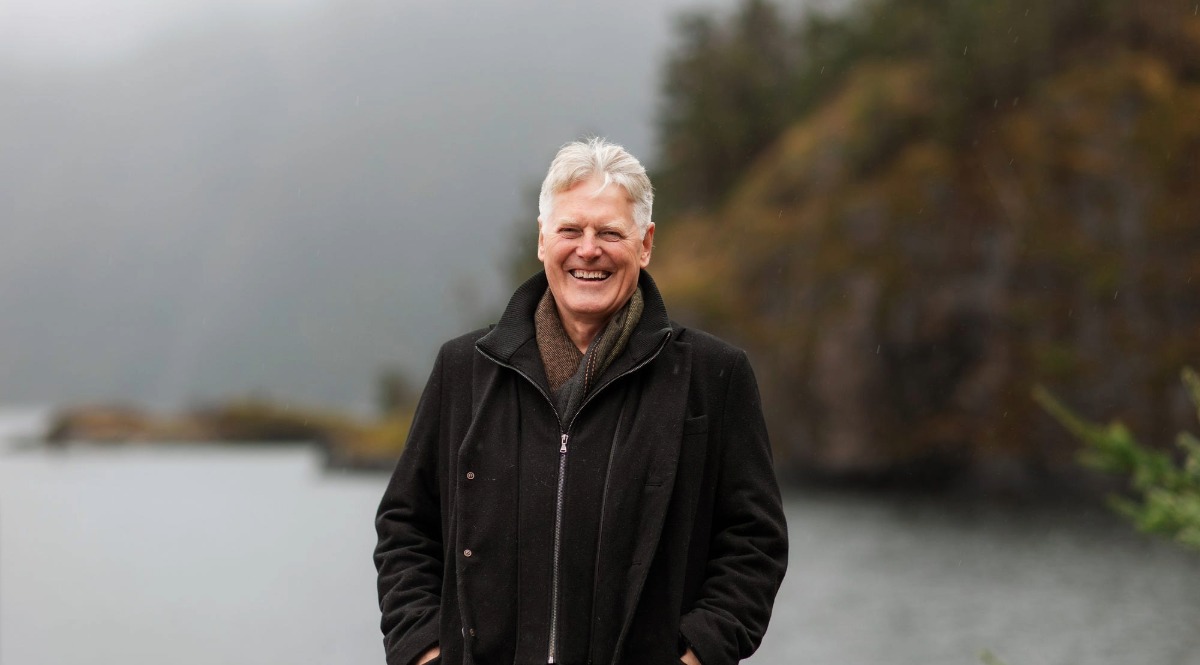
Main image shows Robert Walker, president of Gold River Aquafarms: Courtesy gr-aquafarms.com