
MP raises questions about US$300 million in alleged funding to Canadian anti-fish farming activist groups, as new research points to a billion-dollar campaign targeting salmon aquaculture worldwide.
By Fabian Dawson
SeaWestNews
A Canadian MP has raised questions about whether as much as US$300 million has flowed to groups campaigning against salmon farming in British Columbia, as new research warns that foreign-funded activism is undermining the nation’s food security.
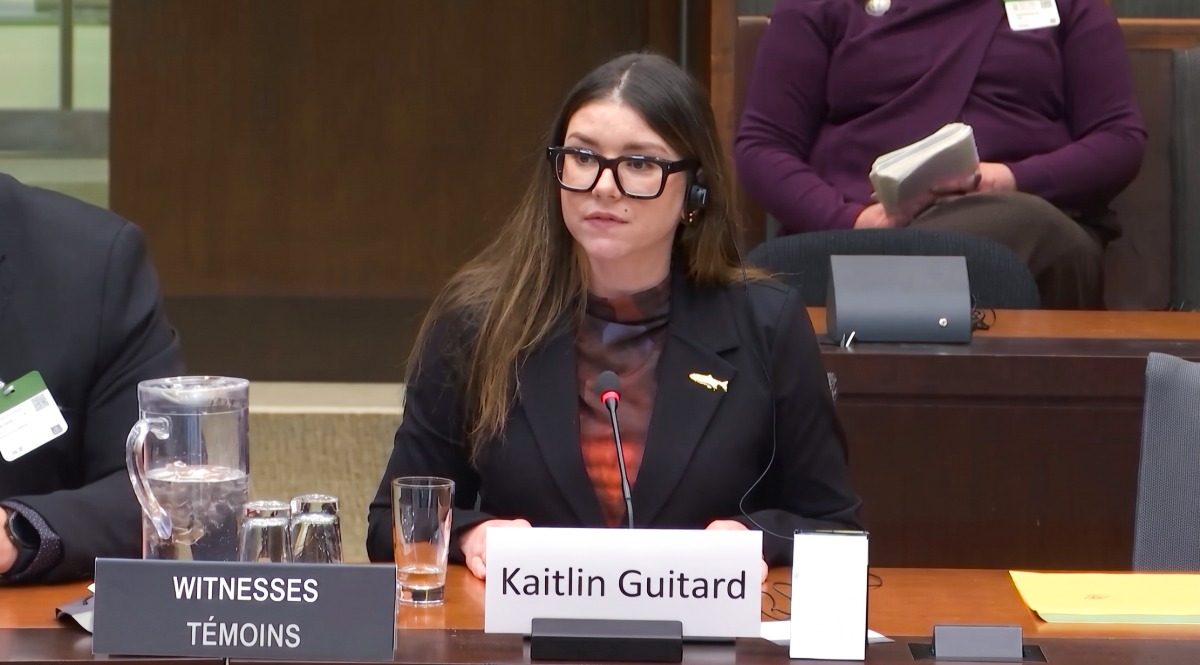
The issue surfaced during testimony before the House of Commons fisheries committee where Conservative MP Clifford Small questioned Kaitlin Guitard, chair of the Young Salmon Farmers of B.C., about American money financing campaigns against the industry.
“Is it possible that $300 million U.S. has flowed through NGOs to put out the anti-salmon farming message in British Columbia?” asked Small, an MP from Newfoundland and Labrador.
“I don’t know the exact number, but I know that our activists are very well-funded by Americans,” Guitard responded.
She said the well-funded campaigns use fear-based messaging to influence public opinion in B.C., where declining salmon production has already cost thousands of jobs and undermined economic opportunities.
Her testimony follows a new analysis by prominent Canadian scholar Ken Coates who raised broader concerns about the scale of foreign financing behind campaigns targeting domestic industries, including salmon farming.
In an analysis published by the Macdonald-Laurier Institute, Coates warned that foreign-funded organizations have gained considerable influence over Canadian policy debates, often without sufficient public scrutiny of where their money originates.
“Few Canadians understand the scale of foreign funding brought into the country in blatant attempts to affect public debates and influence policy at every level of government,” wrote Coates, a distinguished fellow at the institute and former Canada Research Chair in Regional Innovation.
His analysis points to research by Scottish fisheries consultant Owen Stevens, who estimated that more than $1.2 billion flowed toward anti-salmon farming activities worldwide between 2019 and 2025.
According to figures cited by Coates, approximately 20 per cent of that spending was directed toward Canada, equivalent to more than $40 million annually.
Much of the funding was American in origin, Coates wrote, while significant portions could not be traced to their ultimate sources.
His central concern is that well-financed anti-salmon farming campaigns, including the recentOutlaw Ocean Project and Off the Table, can create the appearance of widespread public opposition while obscuring the interests and funding sources behind that opposition.
“Efforts to combat innovation in the food or agriculture industry add to grocery bills, constrains supplies, and limits consumer options,” wrote Coates.
He questions whether Canadians would view financial support for ENGO’s in the same way as foreign funding used to hire Ottawa lobbyists to influence federal Cabinet decisions.

“Canadians should at least know where the money originates and what purposes donors intend it to serve.”
The ‘dark money’ financing debate has also reached Atlantic Canada.
The Atlantic Canada Fish Farmers Association has called on Ottawa to review the charitable status of the Atlantic Salmon Federation (ASF) and ensure that public conservation funding is not used for campaigns designed to damage confidence in farmed salmon.
“Their (ASF) activities are strategic, coordinated efforts to de-market farmed salmon and erode public trust in a vital Canadian food-producing industry,” said association executive director Tom Taylor.
The parliamentary testimony and Coates’ analysis arrive at a critical time as Ottawa is close to deciding whether to retain a Trudeau-era policy, driven by activists, that would ban conventional ocean salmon farming in British Columbia by 2029.
If the ban goes ahead, it will eliminate thousands of jobs and devastate coastal communities, despite federal scientific assessments finding that the ocean salmon farms pose no more than minimal risk to wild salmon populations.
Guitard told parliamentarians that the uncertainty hanging over the sector was devastating younger workers who had chosen careers in aquaculture and hoped to build their lives in B.C.’s coastal communities.
“It’s incredibly frustrating. It’s incredibly uncertain,” she said.
“You are watching your career fade away in front of your eyes,” she told the committee.
“My generation wants decisions that are based on evidence and not emotion.”
“This ban is just bad policy. It’s bad public policy, and it’s based on assumptions that don’t align with available science, economics, or the current state of technology,” she said.
Guitard also challenged Ottawa’s approach to food security, telling MPs that imports of fresh salmon had increased by C$765 million since 2016.
Much of Canada’s imported farmed salmon comes from Norway and Chile, she said.
“If salmon is not grown in Canada, Canadians will continue to import farmed salmon from other countries, supporting foreign economies and foreign jobs instead of Canadian workers, Canadian communities, and Canadian food production.”
The industry’s decline is reflected in broader economic data. B.C. farmed salmon production has fallen by more than 40 per cent since 2015 following federal decisions that removed farms from the Discovery Islands and Broughton Archipelago.

The remaining B.C. salmon farms, all operating under agreements with First Nations rights holders, generate approximately $1.17 billion in annual economic activity and support about 4,560 full-time jobs, including more than 1,000 held by Indigenous workers
Yesterday’s parliamentary hearing also exposed growing frustration among First Nations representatives who say Ottawa has ignored Indigenous communities that support salmon farming.
Conservative MP Ellis Ross pointed to the Kitasoo Xai’xais Nation, whose involvement in aquaculture stretches back decades and whose economy depends heavily on the industry.
Ross also criticized the lack of attention given to Indigenous communities represented by the First Nations for Finfish Stewardship (FNFFS), a coalition of rights-holder Nations that support responsible salmon farming in their territories.
(Main image shows Kaitlin Guitard, chair of the Young Salmon Farmers of B.C. at the House of Commons fisheries committee)