
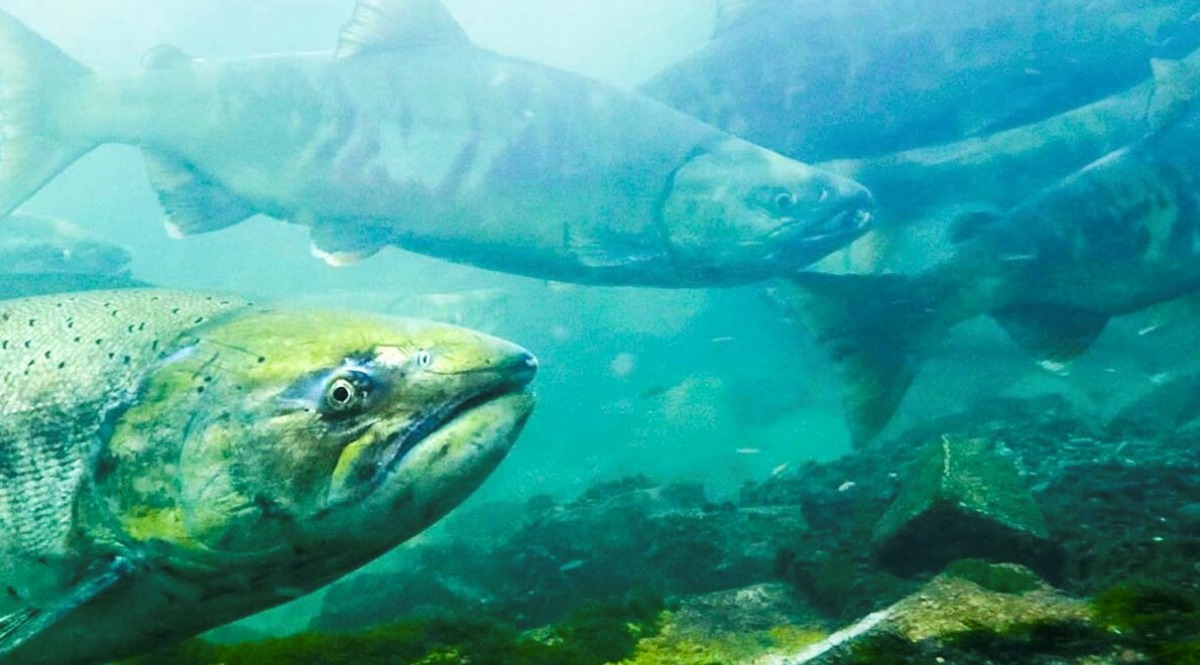
A new Fraser River study finds juvenile salmon are carrying the chemical burden of cities, farms, roads and wastewater long before they reach the ocean or pass a salmon farm.
By Samantha Bacchus McLeod
SeaWestNews
Juvenile Chinook salmon migrating through the Lower Fraser River are being exposed to a mix of pharmaceuticals, pesticides, flame retardants, PCBs and other industrial chemicals during one of the most vulnerable stages of their lives, a new study has found.
The findings widen B.C.’s wild salmon debate, which has often been narrowed by anti-salmon farming activists who blame ocean farms for fluctuations in wild fish returns.
The study states young Chinook are moving through a heavily urbanized river system shaped by wastewater, roads, farms, industry, consumer products and legacy pollution before they even reach the open ocean.
Published inEnvironmental Toxicology and Chemistry, the study screened more than 595 organic contaminants in water and juvenile Harrison River Chinook tissue at five sites in the Lower Fraser basin.
Researchers detected 288 different organic contaminants in water and 368 in juvenile Chinook tissue. Sixteen were identified as “Priority” contaminants with the potential for adverse effects. Another 23 were placed on a “Watchlist” because they may contribute to mixture toxicity.
The contaminants included pharmaceuticals and personal care products, pesticides, polycyclic aromatic hydrocarbons, flame retardants and polychlorinated biphenyls, better known as PCBs.
The study does not say these chemicals are killing juvenile salmon outright. It says they pose potential risks that need closer monitoring, especially because young Chinook are moving through a chemical mixture created by daily human activity across one of Canada’s most developed watersheds.
The research adds an important layer to the fight over wild salmon recovery in British Columbia, where habitat loss, climate change, harvest pressures and changing water quality have already been identified as threats to Fraser River Chinook.
It notes that 85 per cent of assessed Fraser River Chinook populations are classified as Endangered or Threatened. These fish are also critical prey for Southern Resident killer whales, which rely heavily on Fraser River Chinook during the summer.
The study focused on juvenile Harrison River Chinook, an ocean-type stock that spends about 30 to 50 days in the Lower Fraser and its estuary as it migrates to the sea, while moving through one of Canada’s most heavily developed watersheds.
It is where the fish encounter the combined footprint of Metro Vancouver, Fraser Valley agriculture, roads, industrial zones, wastewater treatment plants and older contaminants still circulating through the system.
Five water contaminants were ranked as Tier 1 Priority, the highest concern level in the study: Bisphenol A, caffeine, metformin, endrin and total PCBs.
Bisphenol A is used in plastics and thermal paper. Metformin is a common diabetes drug. Caffeine is widely linked to human use and wastewater. Endrin is a legacy pesticide. PCBs are persistent industrial chemicals.
The study also found a serious monitoring gap.
Researchers said a large, coordinated assessment of organic contaminants and their risk to Chinook salmon in the Lower Fraser had not been conducted since earlier monitoring programs were disbanded.
That gap matters because much of B.C.’s salmon debate is still shaped by selective pressure campaigns rather than full watershed evidence.
The researchers also noted that the Fraser River delta contains 40 tributary streams that serve as critical spawning and rearing habitat for Pacific salmon. Many of those streams have low flows, making them especially vulnerable to pollution from scattered sources such as runoff.
(File image from Raincoast Conservation Foundation, which was part of the study)