
Canadian Seafood Farmers says Ottawa’s new national security pledge to boost domestic food production conflicts with its 2029 B.C. salmon farming ban, a policy that has already deepened the nation’s dependence on imported salmon.
By Fabian Dawson
SeaWestNews
The federal government’s decision to make food security a national priority is intensifying pressure on Prime Minister Mark Carney to reverse the controversial policy to ban ocean salmon farming in British Columbia by 2029.
Canadian Seafood Farmers welcomed Ottawa’s new national security strategy on Friday, saying its commitment to expanding domestic food production offers an opportunity to rebuild Canada’s struggling aquaculture sector, reduce dependence on salmon imports and strengthen coastal economies.
The industry group also warned that years of restrictive federal policies, largely driven by anti-fish farming activists, have undermined seafood production, even as domestic and international demand for Canadian salmon grows.
“Food security is national security,” said Timothy Kennedy, president and CEO of Canadian Seafood Farmers.
“Canadian seafood farmers are already part of the solution. However, our production has been stalled for two decades. Because of poor policy decisions made for B.C., production has declined and imports of salmon have doubled since 2016 to $765 million and we are now more dependent on food from other countries.”
The industry’s response follows the release of The Plan for a Stronger Canada: National Security for Canadians, which identifies food security as one of eight strategic capabilities essential to Canada’s sovereignty and economic resilience.
The federal document places food security alongside defence, energy, critical minerals, transportation and other sectors considered vital to protecting Canadians against global economic disruptions.
Under the plan, the government commits to strengthening food security through expanded domestic production, processing and distribution as part of a National Food Security Strategy.
The strategy also warns that Canada’s historical dependence on international trade relationships has become a source of vulnerability as the global economy faces increasing instability.
Federal trade figures previously reported by SeaWestNews put the value of all salmon imports at more than $1 billion in 2025, an increase of approximately $71 million over the previous year.
Those imports included $41.1 million worth of salmon shipped from China, a 39 per cent increase over 2024, although much of the product shipped from China originates in other countries and is processed there before export.
Meanwhile, B.C.’s farmed salmon production has declined by more than 40 per cent since 2015 following federal decisions to remove salmon farms from several areas of the province, despite the government’s own scientific assessments finding that the marine operations posed no more than minimal risk to wild salmon.
If the 2029 ban is not lifted, B.C. risks losing much of its remaining ocean salmon farming industry, putting 4,560 full-time jobs, $1.17 billion in annual economic activity and $134 million in direct economic benefits to First Nations at risk.

The growing reliance on imported salmon has also raised questions about what the planned 2029 ban could mean for Canadian grocery prices.
In an interview with SeaWestNews earlier this month, food economist Dr. Sylvain Charlebois, senior director of Dalhousie University’s Agri-Food Analytics Lab, urged Ottawa to conduct a comprehensive assessment of the ban’s potential effects on consumer prices, domestic seafood supplies and food security.
“Every time there’s a policy shift, Ottawa should have the obligation to assess how food security can be impacted over time domestically as a result of these measures,” Charlebois said.
Canadian Seafood Farmers argues that aquaculture should be recognized as part of Canada’s agricultural sector and included in the development and implementation of Ottawa’s National Food Security Strategy.
The association said Canadian aquaculture produced more than 160,000 tonnes of farmed seafood in 2024, worth $1.36 billion at the farm level. Its broader economic contribution was estimated at $6 billion, supporting 18,000 full-time jobs and generating $1.01 billion in labour income.
The organization said Canada has considerable potential to expand production as global aquaculture grows to meet rising seafood demand.
“With globally leading potential, it’s time to supercharge the sector’s production and job creation,” Kennedy said.
“Our farmers living in remote rural and coastal communities help ensure that our country remains sovereign by working and living in these areas.”
“With the right policy recognition and support, we can grow more food here at home, create jobs in coastal and rural communities, achieve real and meaningful Indigenous reconciliation, and help build a more sovereign and resilient Canada.”
Canadian Seafood Farmers said it is seeking a role in developing the National Food Security Strategy, alongside Canada’s established agricultural and food-processing industries.
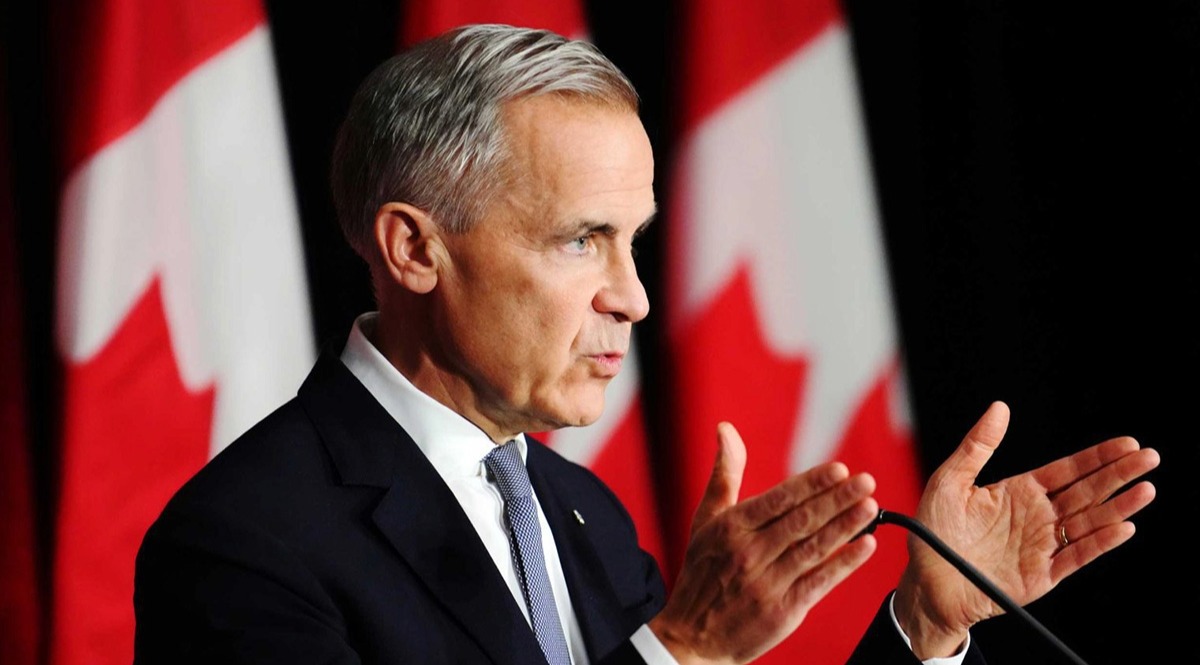
(Main file image shows Prime Minister Mark Carney)